“News That Moves With You.” website - www.inorbithost.com

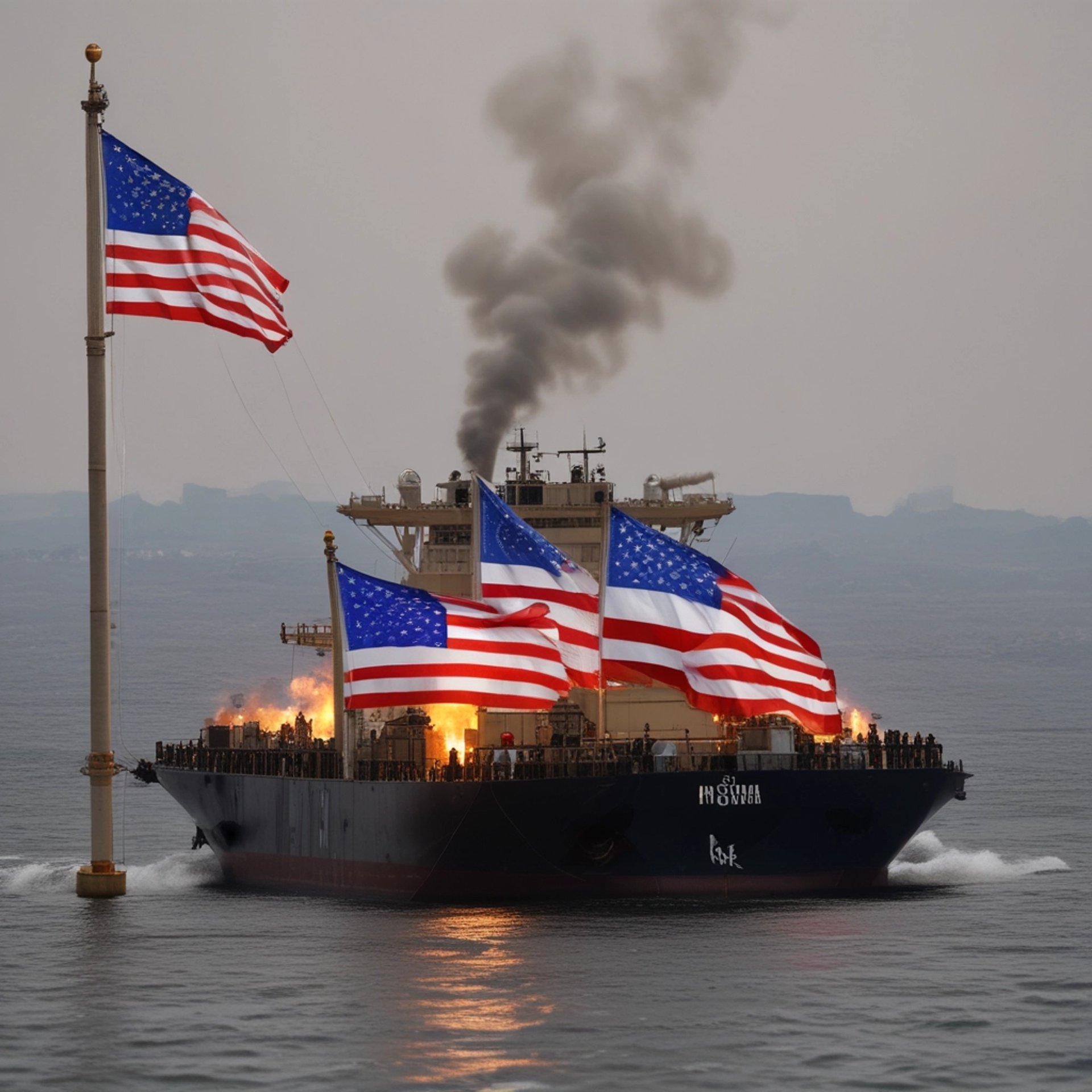
The US–Iran conflict is not a single war — it’s a long-running geopolitical rivalry involving nuclear issues, military tensions, sanctions, and regional power struggles. Here’s a clear and updated explanation (including what’s happening right now in 2026). What is the US–Iran conflict?-The conflict is a decades-long political and military tension between the United States and Iran, mainly over:
Iran’s nuclear program
US sanctions on Iran
Influence in the Middle East
Support for regional armed groups
The relationship became hostile after Iran’s 1979 Islamic Revolution, and tensions have repeatedly escalated since then.The US and Iran are holding high-stakes nuclear negotiations in Geneva to avoid a possible military clash. Iran wants sanctions removed; the US wants limits on nuclear and missile programs. At the same time, Washington has added new sanctions targeting Iranian oil networks. This means that diplomacy and pressure are occurring simultaneously.- Rising military tensions-The US has deployed carrier strike groups and increased forces in the Middle East to deter Iran. Iranian leaders warn that any attack could trigger a wider regional war. The situation is tense — but still short of a full-scale war.
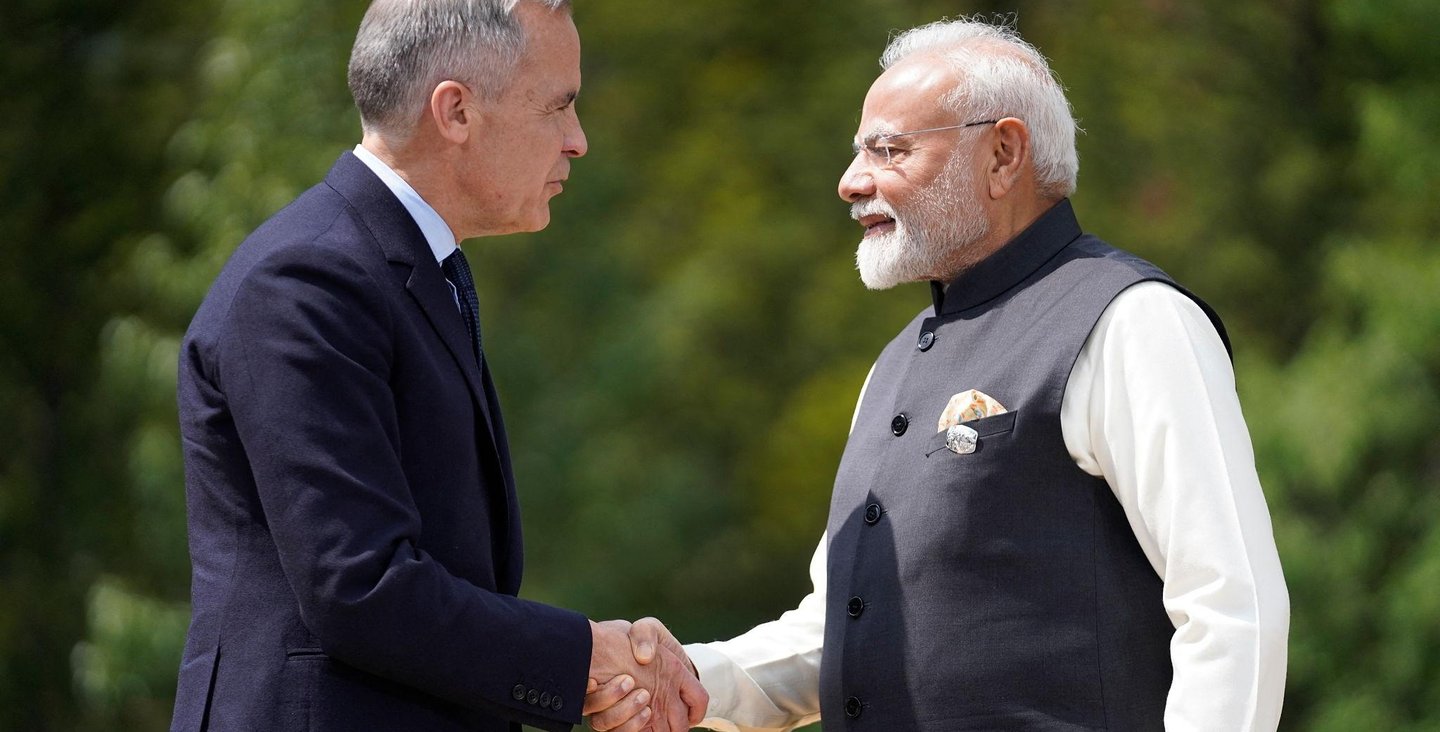
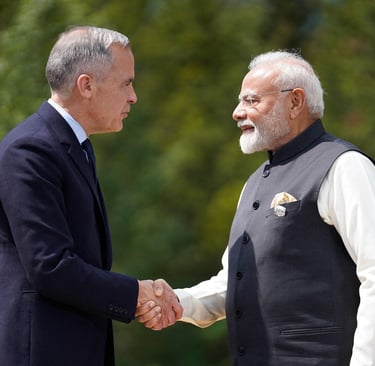
Canadian Prime Minister Mark Carney’s two-day visit to India highlights a deliberate effort to stabilise and rebuild relations after years of diplomatic strain. CANADA PUSH Positioning himself as a champion of cooperation among middle-power nations, Carney has adopted a more pragmatic and forward-looking diplomatic style since taking office.
A Calmer Diplomatic Tone
Ottawa’s approach has shifted noticeably under Carney. Instead of public disputes over sensitive issues, his government has prioritised quiet diplomacy and respectful engagement. This measured tone has helped reduce tensions and reopen channels for constructive dialogue with New Delhi.
Trade and Economic Priorities
Economic cooperation has become the backbone of the renewed partnership. Canada views India as a fast-growing market for energy, agriculture, and technology collaboration, while India sees Canada as a reliable partner for investment and resources. By focusing on shared economic gains, both sides are working to revive stalled negotiations and rebuild trust.
Strategic Alignment in the Indo-Pacific
Carney’s outreach reflects a wider Indo-Pacific strategy, presenting Canada as a collaborative middle power ready to work with India on resilient supply chains, maritime stability, and emerging technologies. This aligns with India’s broader effort to diversify partnerships and strengthen regional security networks.
Rebuilding Political Confidence
High-level meetings, carefully coordinated messaging, and a willingness to avoid escalation have helped restore a degree of political confidence between the two governments. While differences still exist, both countries appear focused on shaping a future-oriented relationship rather than revisiting past disputes.
What Comes Next
Rather than dramatic announcements, the visit signals steady normalisation. Expanded cooperation in defence, clean energy, education, and migration could define the next phase of Canada-India relations if current momentum continues.
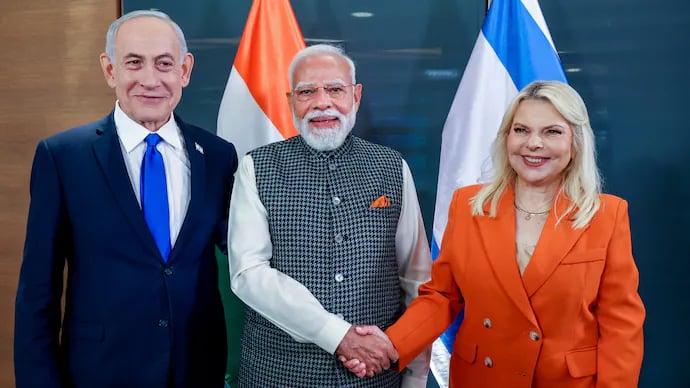
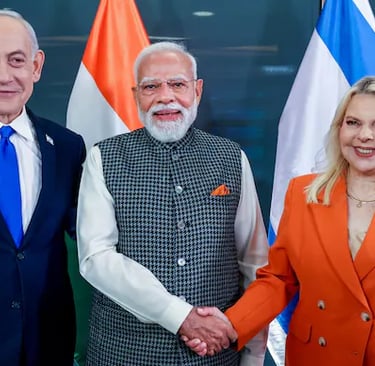
Prime Minister Narendra Modi’s landmark visit to Israel marked a major shift in India’s West Asia diplomacy. It was the first-ever standalone visit by an Indian Prime Minister to Israel and signalled a new level of strategic engagement. Here are the key takeaways: Strategic Upgrade- India–Israel ties were elevated to a stronger strategic partnership, with deeper cooperation in defence, intelligence, and counter-terrorism. Defence & Security Boost-Israel reaffirmed its role as one of India’s top defence suppliers, strengthening collaboration in missile systems, drones, border surveillance, and cybersecurity. Innovation & Technology Focus-Both sides emphasised joint work in agriculture technology, water management, artificial intelligence, and startup ecosystems — sectors where Israel has global expertise. Balanced West Asia Policy-Despite closer ties with Israel, India maintained its traditional support for the Palestinian cause, signalling a balanced and independent foreign policy approach. Strong Personal Diplomacy-Modi’s public outreach with Israeli leadership, including warm engagements with then Prime Minister Benjamin Netanyahu, showcased visible political chemistry and reinforced bilateral confidence. Why It Matters-The visit marked a turning point in India’s West Asia outreach — transforming India–Israel relations from quiet cooperation to an openly strategic partnership spanning defence, innovation, and geopolitics.
Global economy heading towards disaster, March 5th, 2026
Global think tank reacting to the US-Israeli war with Iran
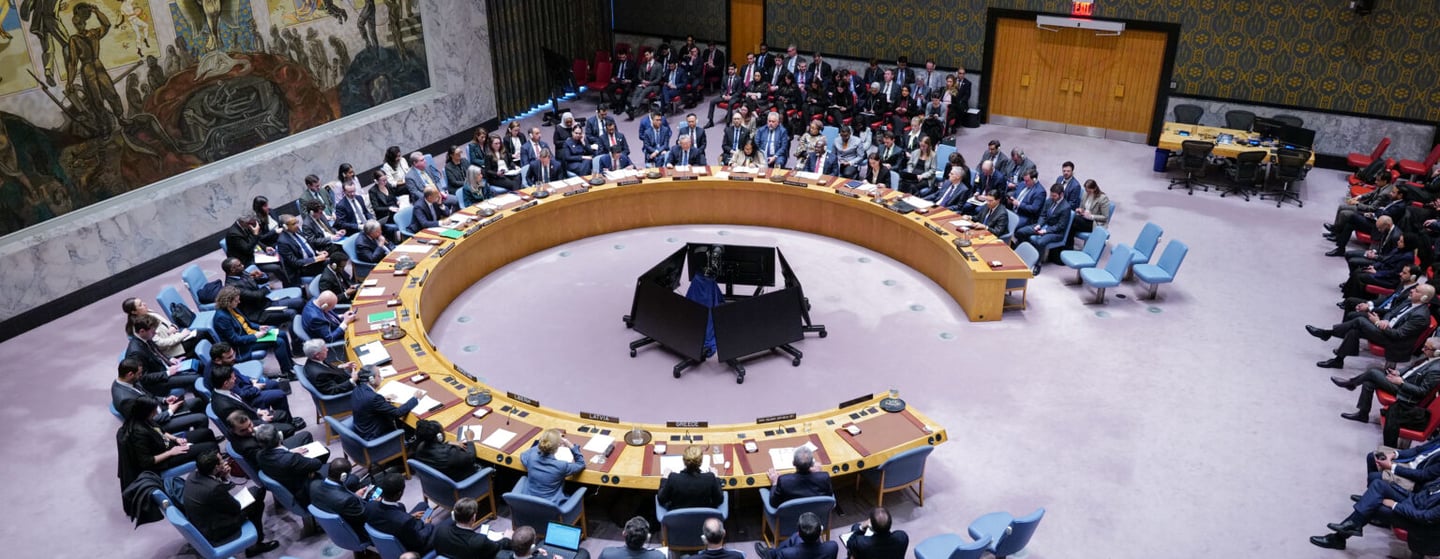
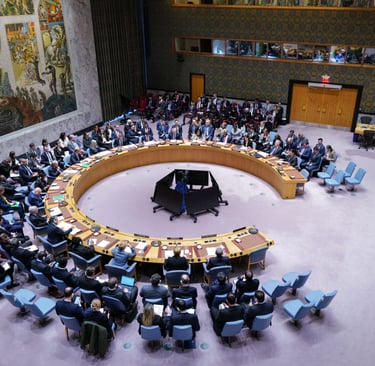
United Nation Security Council meeting on the situation in the Gulf region
The war against Iran has escalated to a regional conflict
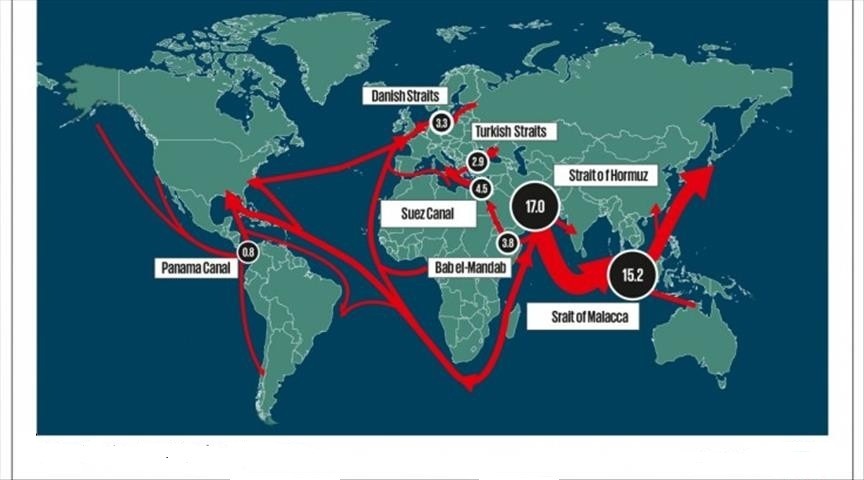
Impact on the global economy:- Hormuz blocked: Global economy is in a state of agonal breathing as Iran seals the world’s energy jugular. For energy-dependent nations such as China, India, South Korea, and Japan, the closure of the Strait of Hormuz would pose a severe threat to their energy security and economic stability.
Strait of Hormuz Blockade: A Global Energy Crisis Unfolds. The unthinkable has become reality. A major escalation in the conflict between the United States, Israel, and Iran has triggered a dramatic shift in the security situation across the Persian Gulf. The latest developments have reportedly resulted in the death of Iran’s Supreme Leader, Ali Khamenei, pushing tensions in the region to unprecedented levels. In response, Tehran appears to have taken its most powerful strategic step yet — effectively blocking the Strait of Hormuz, one of the world’s most critical energy routes. As of 4th March, the narrow maritime corridor is under what experts describe as a de facto blockade, creating shockwaves across global energy markets and international shipping.
Why the Strait of Hormuz Matters The Strait of Hormuz is often described as the world’s most important oil chokepoint. Roughly one-fifth of the global oil supply passes through this narrow waterway every day, linking the Persian Gulf’s energy exporters to markets across Asia, Europe, and beyond. Countries such as India, Japan, and South Korea depend heavily on oil and liquefied natural gas shipments that travel through this route. Any disruption to shipping here can trigger immediate spikes in oil prices, supply shortages, and economic instability. With the strait now effectively blocked, analysts warn that the situation could quickly evolve into a global energy crisis.
IRGC Patrols and Maritime Warnings
Reports indicate that the Islamic Revolutionary Guard Corps (IRGC) has deployed patrols across the strait, enforcing restrictions on commercial shipping. Tankers and cargo vessels approaching the Gulf region are reportedly being warned not to proceed.
Since 28 February, maritime security agencies such as UK Maritime Trade Operations (UKMTO) and the European Union’s naval mission Operation Aspides have reported a dramatic change in the maritime environment. According to alerts issued to shipping companies, vessels entering the Gulf of Oman have received repeated radio messages over maritime VHF channels stating that ships are not permitted to transit the strait. For shipping operators, these warnings signal a serious security threat.
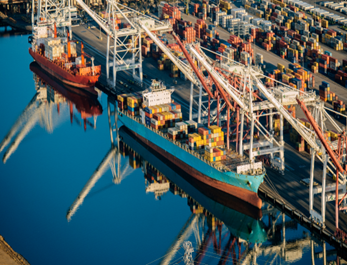
From Warnings to Real Attacks: What began as warnings has reportedly escalated into direct attacks on commercial vessels. Maritime security sources say a Palau-flagged oil tanker was struck by projectiles near the coast of Oman, resulting in a large fire onboard. The incident highlights the risks facing ships attempting to navigate the region. Another alarming incident involved the tanker MKD Vyom, where a projectile reportedly hit the engine room. According to ship management reports, the strike caused severe damage and resulted in the death of a crew member. These incidents suggest that enforcement of the blockade is not merely symbolic but backed by kinetic military action. Shipping Companies Reroute as Markets React. Major global shipping companies are already reconsidering routes through the Persian Gulf. Several large tanker operators and cargo shipping firms have reportedly begun diverting vessels away from the region to avoid potential attacks. This sudden disruption is sending ripples through global energy markets. Oil traders are closely watching the situation, with prices reacting sharply to any new developments.If the blockade continues, energy supplies from Gulf producers such as Saudi Arabia, the United Arab Emirates, and Kuwait could face significant delays. For energy-dependent economies across Asia, the consequences could be severe.
A Regional Conflict Becoming a Global Crisis
What initially appeared to be a regional military confrontation is rapidly evolving into a crisis with global consequences. The shutdown of the Strait of Hormuz threatens not only maritime security but also the stability of international energy markets. If the blockade continues or intensifies, governments around the world may be forced to consider military escorts for commercial shipping or emergency energy supply measures.For now, the world is watching closely as one of the most vital arteries of global trade stands dangerously close to paralysis. Strait of Hormuz blockade, Iran conflict, global oil supply crisis, Persian Gulf shipping disruption, maritime security crisis, and energy supply routes.
A Dramatic Naval Strike in the Indian Ocean
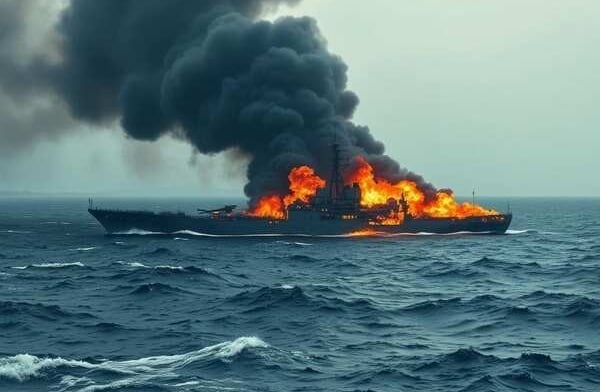
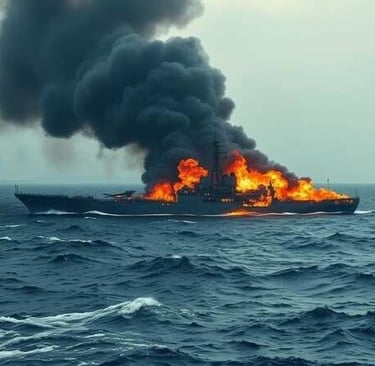
A major escalation in the ongoing confrontation between the United States Navy and the Islamic Republic of Iran Navy has unfolded in the Indian Ocean, a U.S. submarine reportedly torpedoed and sank an Iranian warship near the southern coast of Sri Lanka. The vessel, identified as IRIS Dena, was attacked approximately 40 nautical miles south of Galle. According to defence reports, the strike was carried out by a nuclear-powered U.S. submarine using a Mark-48 heavyweight torpedo, one of the most advanced anti-ship torpedoes currently in service. Witnesses and maritime monitoring agencies reported a massive explosion followed by thick plumes of black smoke as the Iranian frigate caught fire and began sinking rapidly into the sea.
Heavy Casualties and Rescue Operations. The attack resulted in significant casualties among the Iranian crew. Initial reports suggest that over 80 sailors were killed, while several others were rescued from the water. The Sri Lanka Navy launched an immediate search and rescue operation, deploying patrol vessels and helicopters to the area after receiving distress signals from the damaged ship. Rescue teams managed to pull around 30 injured sailors from the sea. Survivors were transported to hospitals in Galle for medical treatment. However, several crew members remain missing, and rescue teams continued combing the waters for survivors in the hours following the incident. The warship had recently participated in an Indian Naval Exercise. What makes the incident geopolitically significant is that the IRIS Dena had recently visited India.The frigate had taken part in multinational naval exercises hosted by the Indian Navy in Visakhapatnam. These exercises involved warships from several countries and were aimed at enhancing maritime cooperation and operational coordination. After completing the exercises, the Iranian vessel had begun its return voyage toward the Persian Gulf when it was attacked in international waters. The proximity of the incident to major Indian Ocean shipping lanes has raised diplomatic and security concerns among regional powers.Strategic Importance of the Iranian Frigate The IRIS Dena was one of the more capable ships in Iran’s naval fleet and part of Tehran’s effort to expand its blue-water naval presence beyond the Persian Gulf.The frigate was equipped with several advanced systems, including:
Anti-ship cruise missiles
Surface-to-air defence missiles
Torpedo launch systems
Naval artillery guns
Advanced radar and electronic warfare equipment
A helicopter landing deck for maritime surveillance aircraft
Military analysts consider the loss of the vessel a significant blow to Iran’s naval capabilities, particularly in long-range maritime operations. Part of a Wider US-Iran Naval Confrontation The sinking of the Iranian frigate appears to be part of a broader military campaign targeting Iranian naval assets.Tensions between the United States and Iran have sharply escalated in recent weeks following:
Missile exchanges in the Middle East: Attacks on military facilities, increased naval deployments across strategic waterways. Officials from the United States Navy stated that the operation demonstrates the capability of American forces to neutralise hostile naval threats in international waters. Iranian authorities, however, condemned the attack and warned that retaliatory measures could follow, raising fears of further escalation. Global Implications for Maritime Trade The incident has sparked concerns about global maritime security and international trade routes. The Indian Ocean region connects key shipping corridors linking Asia, the Middle East, and Europe, carrying a large share of the world’s energy supplies and commercial goods. Security experts warn that continued naval confrontations could threaten shipping lanes, potentially affecting Global oil markets, International trade flows, Maritime insurance costs, and Regional diplomatic stability. Countries across Asia and the Middle East are closely monitoring developments as the conflict risks spreading beyond its original theatres. Rising Tensions and Uncertain Future The sinking of IRIS Dena marks one of the most dramatic naval incidents in the current US-Iran confrontation. With dozens of sailors dead and geopolitical tensions rising across the Indian Ocean, the attack highlights the growing danger of a wider regional conflict involving major naval powers. Whether the situation escalates further or diplomatic channels succeed in calming tensions remains uncertain. For now, the incident serves as a stark reminder of how quickly maritime confrontations can reshape global security dynamics.